
PoYo
EGYPTSOUQEntertainment
4.158.00 Reviews
- Version
- 7.0.5
- Installs
- 100.00K
- Age Rating
- Teen
Screenshots
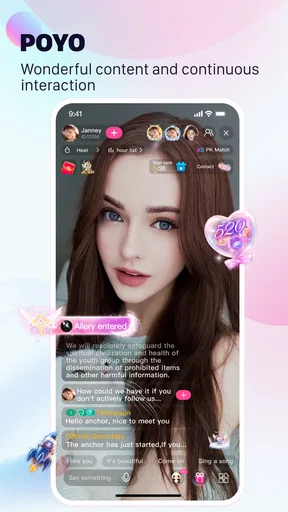
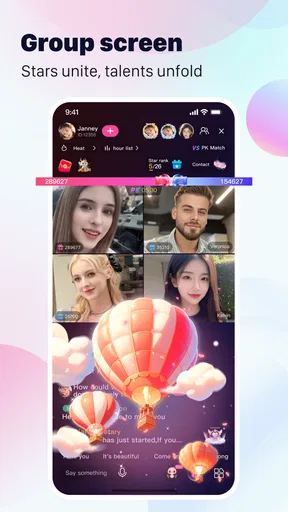
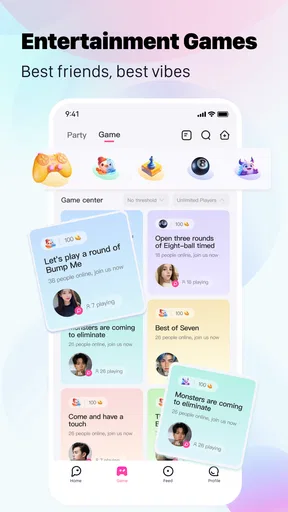

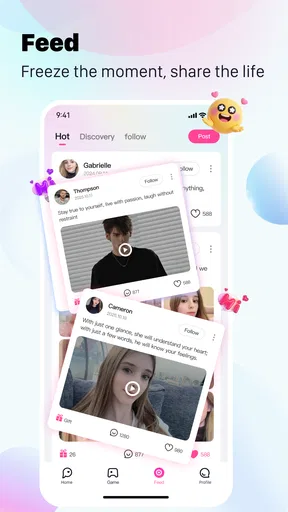
Our Review of PoYo
 Analysis by Appyee
When I try a new entertainment app, I do not begin with the promise on its store page. I begin with a more practical question: what kind of experience is it really offering, and how much control will I have while using it? PoYo presents itself as a place to explore love together, which makes it more personal than a simple video or music app. My impression is that it is aimed at people who want an interactive social experience built around connection, discovery, and shared attention rather than passive scrolling.
That focus gives the app a clear identity, but it also means the right expectations matter. This is not the sort of entertainment app I would install purely to fill five quiet minutes with random clips. It makes more sense when I am willing to participate, make choices, and think about how I want to interact with other people. The experience can feel more engaging than ordinary content feeds, yet it also asks me to be more careful about boundaries and personal information.
What PoYo feels like in everyday use
In practical terms, I see PoYo as a social entertainment app for users who are curious about romantic interaction and shared discovery. The developer is EGYPTSOUQ, and the app is free to install, which makes trying it relatively easy. It belongs to the Entertainment category, but its appeal is narrower than that label suggests: the central attraction is not simply consuming media, but exploring a relationship-oriented environment.
My first useful tip is to treat the opening session as an orientation rather than a commitment. I would look carefully at every screen before accepting anything, especially prompts involving an account, communication, profile details, or purchases. Apps with a social angle often become more enjoyable once the user understands the available choices, and PoYo is better approached with that same patience. Rushing through setup can make the experience feel less personal and can leave me unsure about what I agreed to.
The app has reached over one hundred thousand installs and holds a 4.1 average from roughly nine hundred ratings. Those figures suggest that it has attracted a meaningful audience, while also leaving room for mixed experiences. I would not read the rating as proof that every interaction will be smooth. Instead, I take it as a reason to try the app with realistic expectations: there is enough interest to make the social side worthwhile, but not enough evidence to assume it will suit everyone.
For a realistic everyday scenario, imagine opening PoYo after work because you want something more engaging than watching another familiar series. You have a short period available, so you browse cautiously, see how the app frames interaction, and decide whether you want to continue. If the atmosphere matches your expectations, the experience can become a small daily ritual. If you are looking for completely private, offline entertainment, however, this is probably the wrong direction from the start.
Why the social angle changes the trust question
With a conventional streaming app, the main concerns are usually advertising, subscriptions, and recommendation quality. With PoYo, I would add identity, communication, emotional pressure, and the handling of personal choices. That does not automatically make the app unsafe, but it does change how I judge it. A pleasant interface is not enough; I also want to know whether I can make deliberate decisions about participation.
The Teen content rating is important here. I would not interpret it as a guarantee about every conversation or every user interaction. I would treat it as a reminder that younger users and families should pay attention to the app’s visible controls, account behavior, and purchase prompts. If I were helping a teenager decide whether to use it, I would discuss not sharing private contact details, location information, school details, or photographs that could identify them.
That advice is especially relevant in a relationship-oriented app because users may disclose more when the conversation feels friendly. My own rule would be to keep early interactions inside the app, avoid moving immediately to another service, and stop when a request feels rushed or manipulative. This is not a criticism of one particular feature; it is a sensible boundary for any social entertainment product where personal connection is part of the appeal.
Controls and choices I would check first
I would spend a few minutes exploring the account and profile areas before becoming active. The most useful controls are the ones that let me decide what information is visible, whether I can change participation settings, and how I can respond when an interaction is unwanted. I would also look for ways to leave a conversation, remove a connection, or report behavior without having to continue engaging.
One non-obvious workflow is to review these settings before creating a detailed profile. That gives me a chance to understand the app’s expectations without first supplying more personal context than necessary. I would begin with the minimum information needed to use the service, then add details only if they clearly improve the experience. This approach also makes it easier to change direction later because I have not built my entire presence around information I may no longer want to share.
I would also check whether notifications can be adjusted. Relationship-focused apps can become intrusive when every interaction is treated as urgent. Turning off nonessential alerts, or limiting them to times when I am available, helps keep the app in its proper place. I prefer entertainment that fits around my day rather than an app that constantly pulls my attention back.
Another practical habit is to review any account action immediately after making it. If I change a profile detail, start a conversation, or enable a setting, I would return to the relevant screen and confirm that the result matches what I intended. This may sound cautious, but it is useful whenever an app combines social activity with personal information. Clear user agency is not just about having buttons; it is about being able to understand the outcome of pressing them.
Data-sensitive moments deserve extra attention
The most sensitive moments in PoYo are likely to be the points where entertainment turns into personal interaction. I would be careful during registration, profile creation, direct communication, photo sharing, and any request that encourages me to reveal information outside the app. These are the moments when a casual experience can become personally identifying, so I would slow down instead of tapping through automatically.
I would not assume that a romantic theme requires a complete personal biography. A nickname, general interests, and a broad sense of what I enjoy may be enough to begin. Details such as a full name, exact workplace, home area, daily routine, or other identifying information should be considered separately. The more specific the information, the harder it is to take back once another person has seen it.
Photos deserve the same care. Before uploading one, I would check the background for house numbers, school logos, workplace badges, travel documents, or anything else that reveals more than intended. I would also avoid using the same highly identifiable image everywhere. This is a small but valuable privacy habit, and it matters more in a social app than it would in a purely personal media player.
Purchases are another point where I would stay alert. PoYo is free to download, but its in-app items range from $1.49 to $259.99 each. That is a wide span, so I would never treat a purchase prompt as a minor tap. I would read the amount, understand what the item does, confirm whether the purchase is one-time or recurring, and use device-level purchase protection where available.
My strongest advice is to avoid buying anything during an emotionally intense interaction. If a conversation makes me feel pressured to spend, prove interest, or respond immediately, I would close the prompt and reconsider later. Entertainment should remain voluntary. A pause is useful because it separates a considered choice from a reaction to social pressure.
How it compares with familiar alternatives
Compared with a streaming service, PoYo offers a more participatory experience but less emotional distance. Streaming is easier when I want predictable control: choose a program, watch quietly, and leave. PoYo is more suitable when I want discovery shaped by interaction. The trade-off is that the quality of the experience depends more on my choices, the people I encounter, and the boundaries I maintain.
Compared with a standard social network, the relationship-oriented focus gives PoYo a more specific purpose. A general network can be useful for keeping up with friends, groups, news, and creators all at once. That breadth can also make it noisy. PoYo may appeal more to someone who wants a narrower theme, while a general platform remains better for people who want one app for many kinds of social activity.
Compared with dating services, I would approach PoYo with more modest expectations unless its actual experience clearly matches what I am seeking. A dating service is usually chosen with the explicit goal of meeting potential partners, while an entertainment app centered on love may be more casual or exploratory. If I wanted structured matching, detailed search tools, or a clearly defined dating process, I would choose a specialist service instead. If I wanted a lighter way to explore romantic interaction, PoYo could be more appropriate.
This distinction is one of the app’s most important trade-offs. Its theme can make the experience approachable, but it may not satisfy someone who wants a direct, goal-oriented path toward a relationship. I would install it for curiosity and social entertainment, not as a substitute for every dating or messaging tool.
Who will get the most from it
PoYo is a reasonable fit for adults and older teens who enjoy interactive entertainment and are comfortable making careful decisions about online social contact. It may suit someone who wants to explore a romantic theme without immediately committing to a conventional dating platform. It can also work for users who like discovering an app gradually, learning its rhythm through regular visits rather than expecting a single, fixed purpose.
I would especially recommend a measured approach for people who tend to overshare when a conversation feels warm. Start with a limited profile, keep notifications under control, and decide in advance what information is off-limits. That preparation does not remove the fun; it protects the part of the experience that should remain yours.
I would skip it if I wanted anonymous, offline entertainment, if I dislike social prompts, or if I find relationship-themed interaction uncomfortable. I would also choose another option if I needed a highly structured dating service, a private messaging tool for people I already know, or a media app with no user-to-user dimension. The free installation lowers the barrier to testing it, but it does not make the app universally suitable.
Version, access, and the practical commitment
The current version is 7.0.5, and the app supports devices running Android 7.0 or later. That makes compatibility worth checking before installation, particularly if I am using an older phone. I would also keep enough storage and system updates available for a smooth experience, since social apps can become frustrating when the device is already struggling.
The app was released on September 30, 2024, so I view it as a relatively recent addition to the entertainment space rather than a long-established everyday utility. That does not determine quality, but it does influence my expectations. I would pay attention to how consistently the app handles account controls, notifications, and user feedback over time before making it part of my routine.
The presence of in-app purchases also changes how I would introduce it to someone else. If a family member is using the app, I would discuss device purchase authentication before they begin. If I am using it myself, I would decide on a personal spending limit in advance. The important point is not simply the price of an individual item; it is preventing several small decisions from becoming one large, unplanned expense.
My cautious verdict
PoYo has a clear idea behind it: make love and connection part of an entertainment experience rather than leaving users with another generic content feed. I appreciate that focus because it gives the app a reason to exist. The free entry point and growing audience make it easy to sample, while the Teen rating and social theme remind me to use it with more awareness than I would bring to a basic video app.
My recommendation is conditional but positive. I would suggest trying it if you are curious about relationship-oriented entertainment, willing to review your settings, and comfortable keeping personal boundaries firm. I would not recommend treating it as a guaranteed dating solution or assuming that a friendly interaction should lead to immediate disclosure, outside contact, or spending.
The best way to use PoYo is deliberately: begin with limited information, inspect the account and notification choices, protect purchases, and leave any interaction that creates pressure. Used that way, it can be an interesting addition to an entertainment routine. If what you really want is private viewing, structured dating, or communication only with people you already trust, a more specialized alternative will serve you better.
After weighing the app’s purpose against those practical limits, I see PoYo as worth trying for the right audience, but not as an automatic recommendation for everyone. Its value depends less on simply installing it and more on whether its social style matches what you want from entertainment. That is why my final view is cautious: explore it, keep control of your choices, and let your own comfort level decide how far you take the experience.
Verdict
Strengths of PoYo
- Simple interface makes core features easy to find.
- Lightweight design should work well on many older devices.
- Quick access to frequently used content saves time.
- Useful for users seeking a focused, uncomplicated experience.
- Regular updates may improve stability and add practical features.
Limitations of PoYo
- Some features may require an account or personal information.
- The app could feel limited for users wanting advanced customization.
- Performance may vary depending on device and connection quality.
- Notifications can become distracting if not configured carefully.
- Availability of certain content or tools may differ by region.
Similar Picks in This Category
View All
Google Play Games
Google LLC3.9

Netflix
Netflix, Inc.4.8

YouTube Kids
Google LLC4.2

Disney+
Disney4.4

Prime Video
Amazon Mobile LLC4.7

Steam
Valve Corporation3.2
Frequently Asked Questions
What is PoYo and what can I use it for?
PoYo is a social and entertainment app designed to help users discover content, interact with other people, and enjoy an engaging mobile experience. After installing it, you can explore its main sections, review available features, and personalize your activity according to your interests. The exact tools may vary by region and app version, so checking the current store description is recommended before downloading.
Is PoYo free to download and use?
PoYo can generally be downloaded without an upfront charge, but some features may depend on optional purchases, subscriptions, virtual items, or other paid services. Before confirming any transaction, review the price, billing period, and renewal conditions shown inside the app store. If you only want to try the basic experience, pay attention to locked features and promotional offers that may appear after installation.
Does PoYo require an account or personal information?
Depending on the version and features you want to use, PoYo may ask you to create an account or sign in through an available login method. Registration can involve information such as an email address, username, profile details, or device permissions. Before accepting, read the privacy policy and permission requests carefully, and avoid sharing sensitive information publicly through your profile or conversations.
Is PoYo safe and suitable for all users?
PoYo’s suitability depends on its content, communication tools, and the way people use the platform. If the app includes public profiles, messaging, or user-generated content, younger users may need parental supervision and privacy settings should be configured carefully. Use blocking and reporting tools when available, avoid meeting unknown contacts in person, and download the app only from the official Google Play Store or Apple App Store.
What devices and permissions are needed to use PoYo?
PoYo is intended for compatible Android or iOS devices, although the required operating-system version can change with future updates. The app may request access to notifications, photos, the camera, microphone, location, or other device functions depending on the features you use. You can review and manage these permissions in your phone’s settings, and denying optional access may limit certain tools without preventing basic use.
